Foliage (Neural Network): Difference between revisions
Jump to navigation
Jump to search
No edit summary |
No edit summary |
||
| Line 33: | Line 33: | ||
|seealso=*[[Inference Overlay]] | |seealso=*[[Inference Overlay]] | ||
*[[Neural Network]] | *[[Neural Network]] | ||
*[[ONNX]] | |||
*[[Foliage areas (Heat Overlay)]] | *[[Foliage areas (Heat Overlay)]] | ||
}} | }} | ||
{{InferenceOverlay nav}} | {{InferenceOverlay nav}} | ||
Latest revision as of 12:59, 14 October 2025
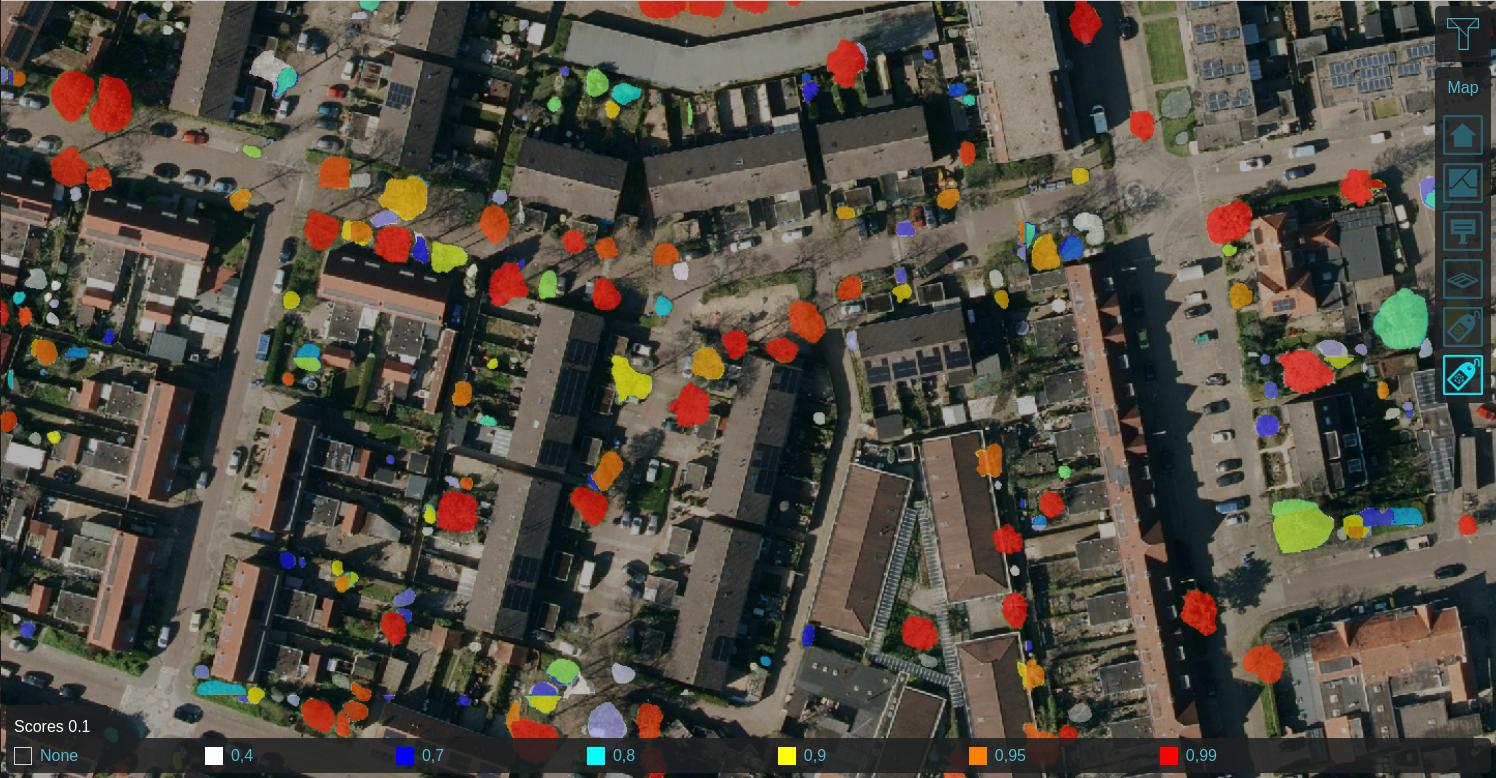
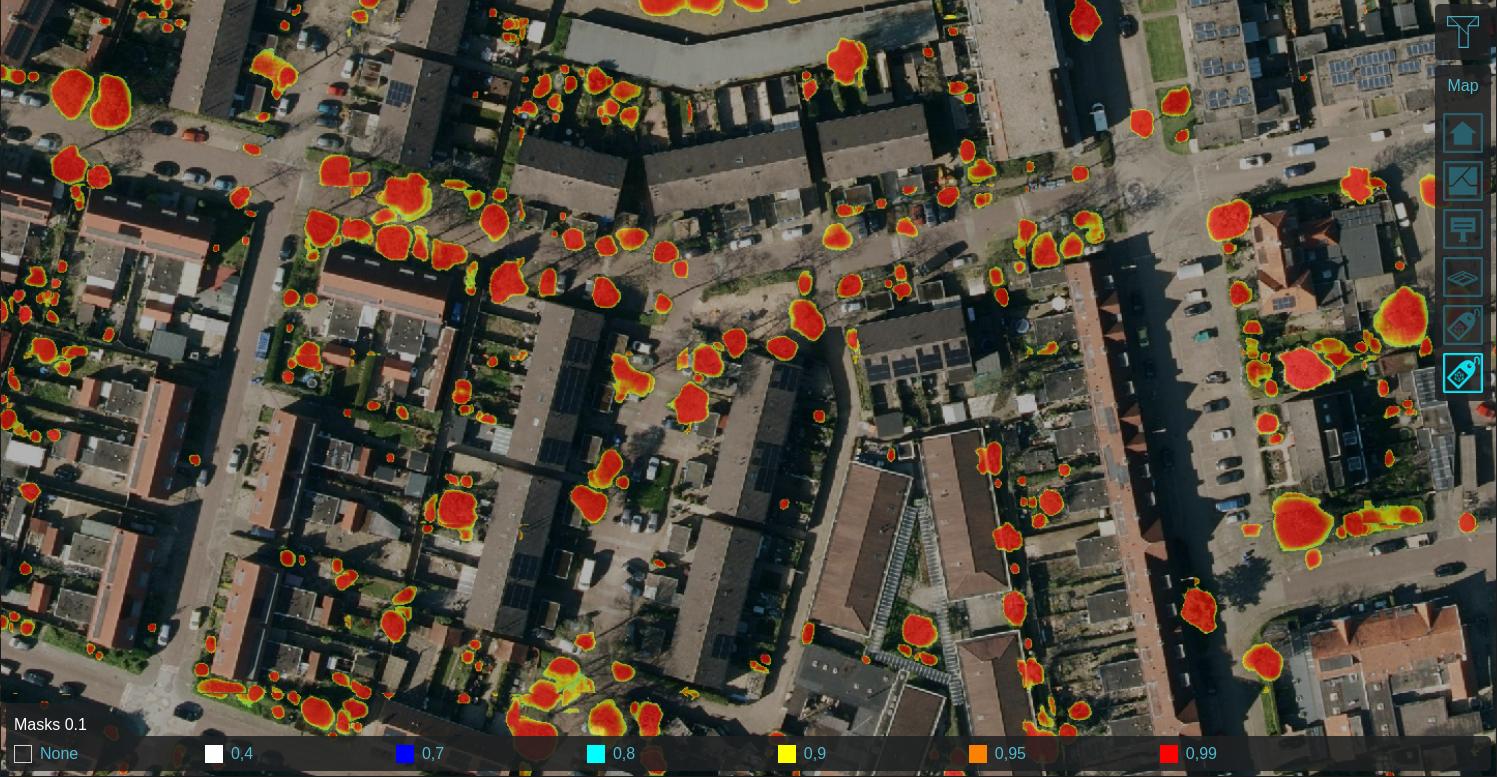
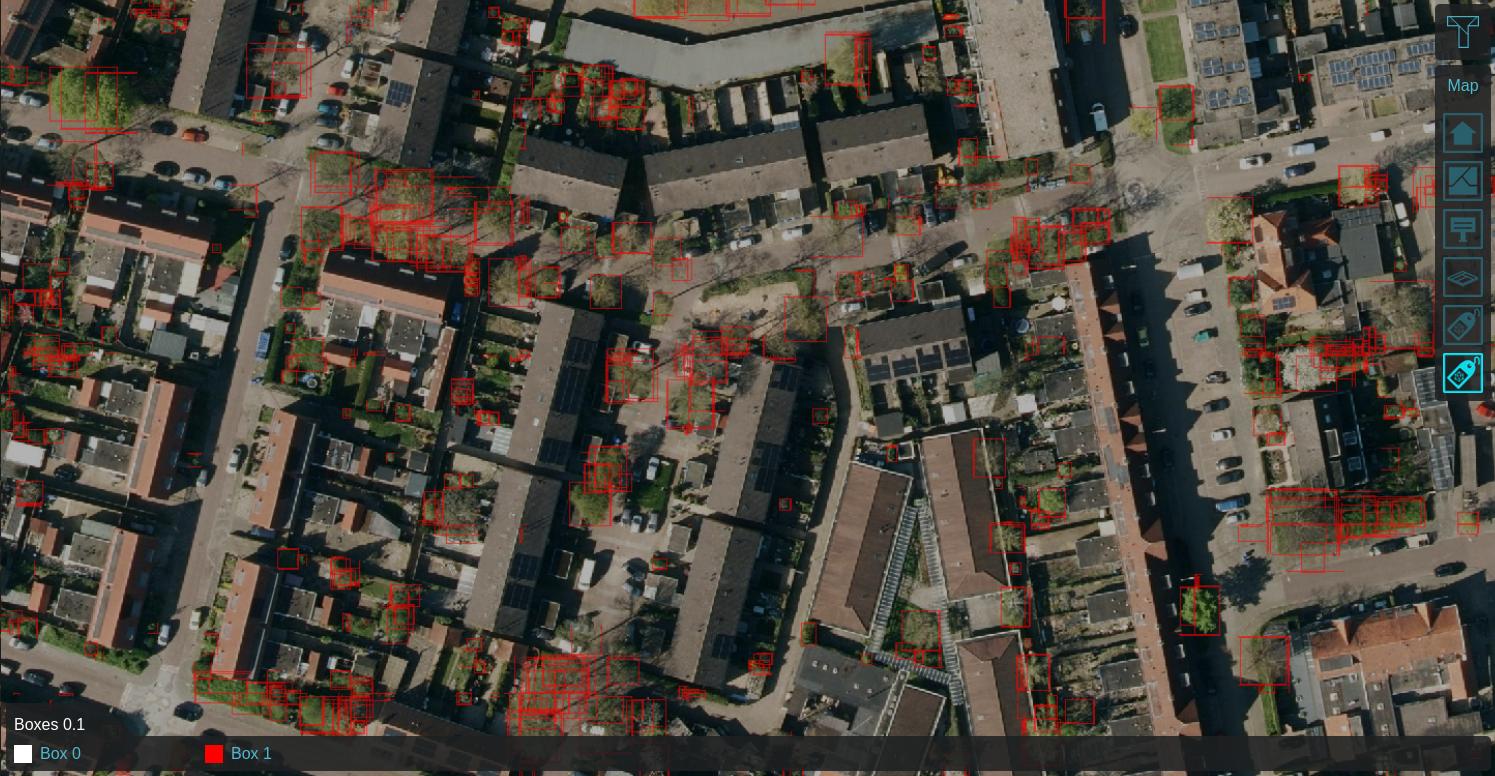
The Foliage Neural Network is a Convolution Neural Network that identifies foliage of individual trees and bushes, mainly for gardens and private property. This Neural Network is not suited for identifying individual trees within forested areas.
An Inference Overlay can be configured with this Neural Network. Its default settings are:
- Preferred grid cell size: 0.25m
- Inference mode: BBox Detection
- Mask threshold: 0.30 (30%)
- Score threshold: 0.20 (20%)
- Stride fraction: 0.50 (50%)
Identifiable features:
- Deciduous Tree
- Pine Tree
- Heath area
- Hedge
- Bush
- Reed
- Flower bed
- Leafless Tree Area
-
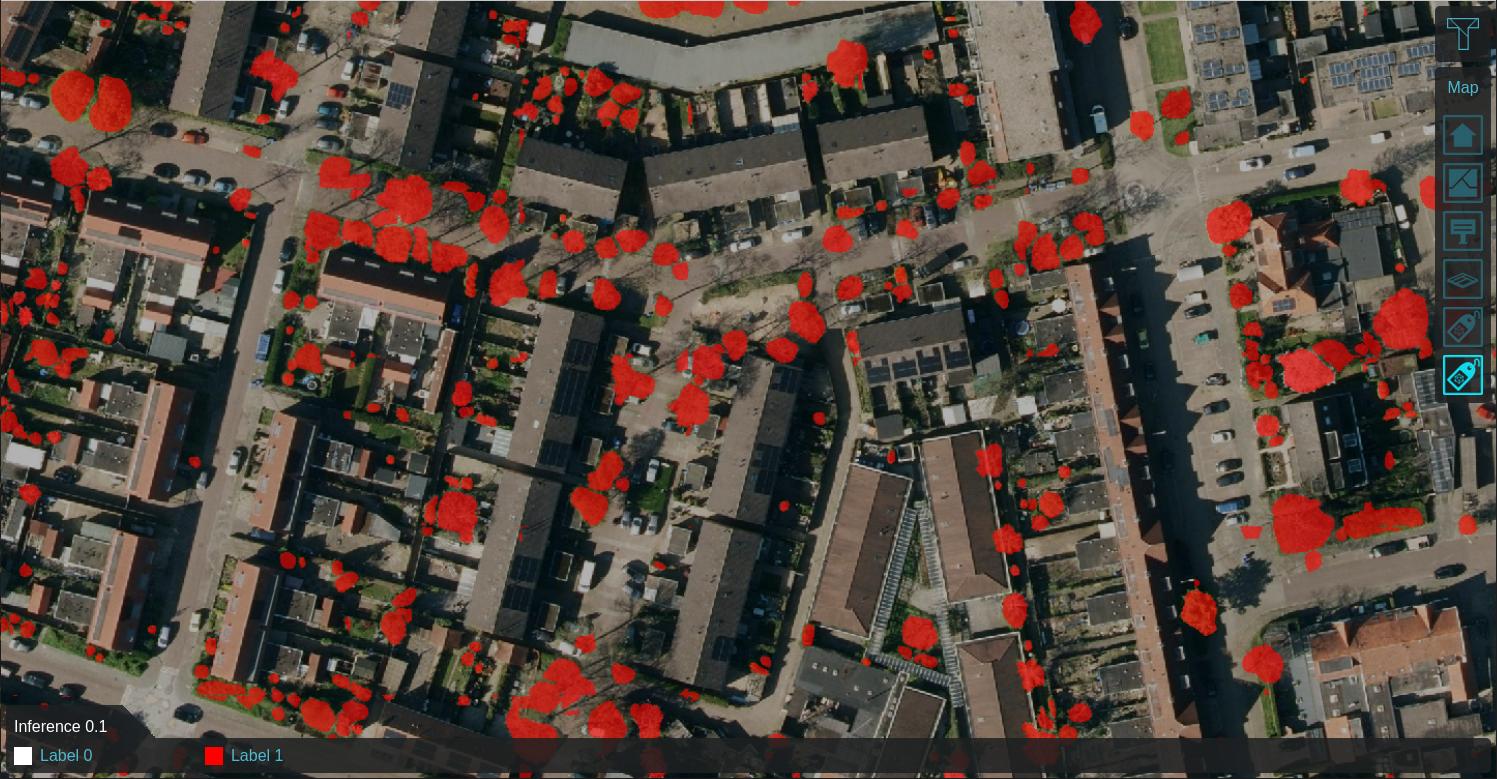 Labeled features on 0.25m satellite image
 -
-
-


Notes
- In order to use the identified foliage areas as input for a Heat Overlay, additional steps have to be taken to obtain an actual foliage height. For more detail, see the how-to's.
How-to's
- How to detect foliage using an Inference Overlay
- How to create foliage height areas based on an Inference Overlay
- How to create the input overlay for leafless trees detection using the Inference Overlay